
Plan the Site for Private Pole Replacement
Once replacement is recommended, the practical questions extend beyond timber or steel. Position, vehicle access, ground conditions and connection arrangements all need professional coordination.
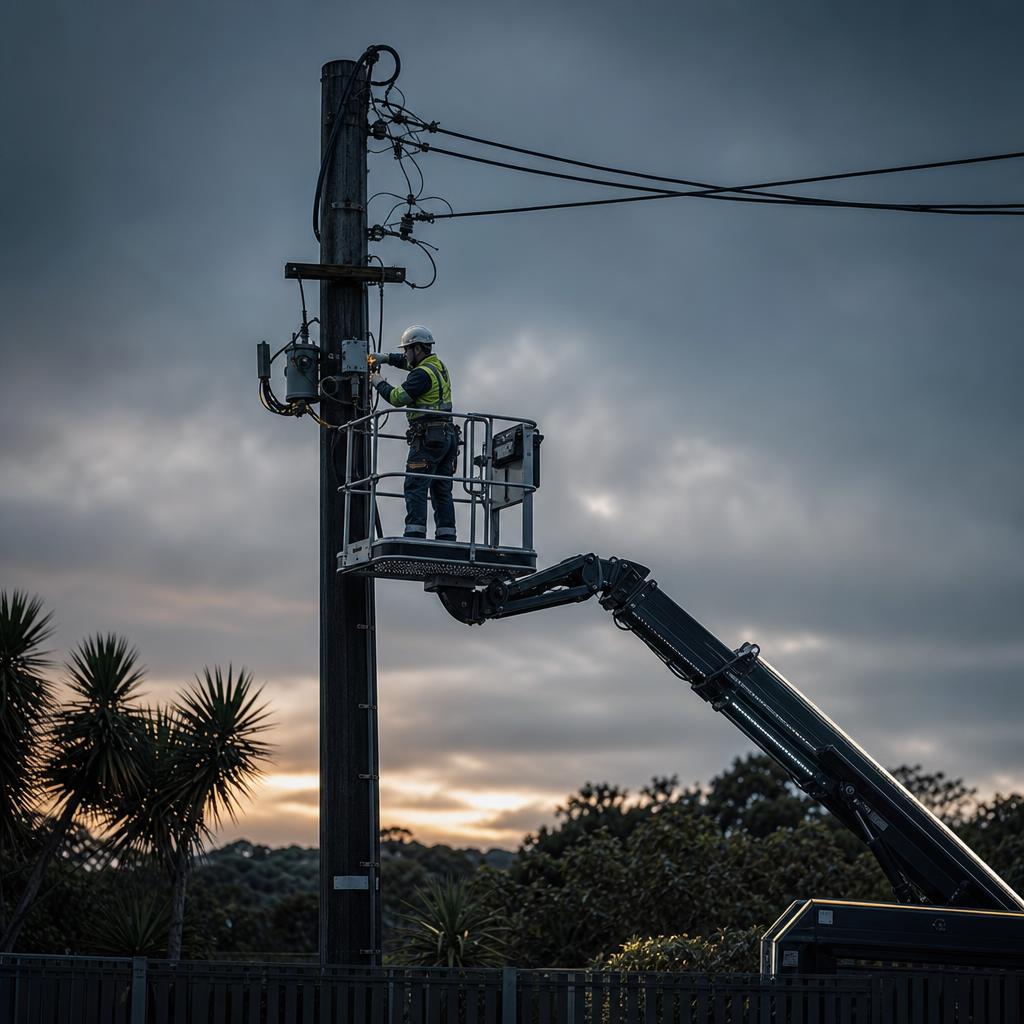
Confirm the proposed position first
Show the assessor future building work, driveways, gates and landscaping. A replacement position must suit the connection requirements and site, not only the owner’s preferred appearance. Do not assume the old location automatically remains suitable.
If the pole position changes, ask what that means for overhead spans, attachment points and the property’s electrical installation. The scope may involve more than removing and replacing one structure. Keep every proposed change on the same site drawing.
Compare material options in context
Timber and steel options should be assessed against relevant requirements, ground conditions, exposure and the accepted design. Appearance and purchase price are only part of the decision. Do not rely on a universal lifespan claim or assume one material is maintenance-free.
Ask what inspections or maintenance are recommended for the selected arrangement and who supplies the product information. A quotation should identify the actual proposed pole and installation scope rather than leaving “standard pole” undefined.
Coordinate lifting, excavation and the work area
Describe narrow access, slopes, gardens, underground services and surfaces that may be affected. The contractor must determine safe plant access, excavation and exclusion arrangements. Do not clear a route by cutting vegetation near overhead conductors or digging close to the pole.
Clarify who identifies underground services, arranges any necessary permissions and restores disturbed surfaces. If neighbouring or public access is affected, those arrangements need to be resolved before the installation date is treated as firm.
- Proposed position and access route on a site plan.
- Civil work, removal and disposal responsibilities.
- Protected areas, surface finishes and reinstatement expectations.
- Contacts for affected occupants and other property users.
Make connection transfer and handover explicit
Ask who performs and authorises disconnection, transfer and reconnection, and what prerequisites apply. Verify the relevant current authorisations for network connection work. The lifting contractor’s availability alone does not establish that the electrical stages are arranged.
Retain the completed-work records and any notice close-out evidence. For a ZEOS private-pole proposal, provide the assessment findings and wider site plans so the discussion includes the full replacement sequence rather than only the pole supply.
General planning information, not a diagnosis or electrical work instructions. Requirements and equipment suitability must be confirmed for your property.
Need help with private power poles?
Share the assessment or notice, site layout and access constraints. Ask the proposal to identify the pole, position, connection responsibilities, interruption arrangements and reinstatement scope.
Explore Private Power Poles with ZEOS →