Prepare for a Private Pole Assessment
A leaning or damaged private pole needs professional advice, not an owner’s hands-on inspection. Your preparation should focus on safe observations, notices and access information.
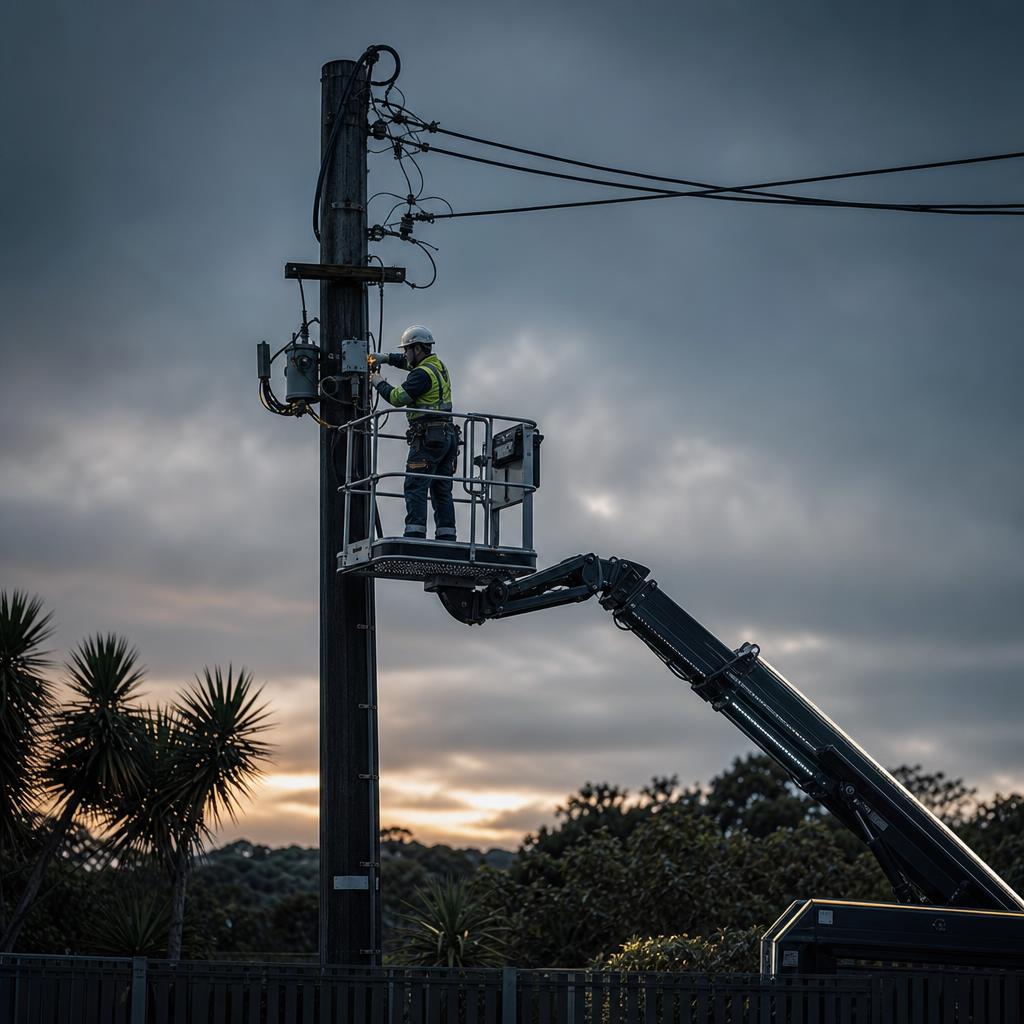
Keep clear of the pole and conductors
If a pole is visibly unstable, wires are low or damaged, or there is sparking, keep people and vehicles away and contact the distributor for the supply hazard. Call 000 for immediate danger. Do not touch the pole, support it with a vehicle or attempt to move attached cables.
Never dig around the base, strike it to assess decay or climb for a closer view. The visible portion does not establish its structural condition, and approaching the pole can expose you to electrical and collapse hazards.
Collect existing information safely
Keep any defect notice, previous inspection report and property records. Note the location, apparent change and when it was first noticed, using only observations from a safe distance. A photograph is useful only if it can be obtained without approaching the hazard.
Ask the assessor to confirm ownership and work boundaries. A pole standing on private land should not be used as the sole basis for deciding every attached asset belongs to the property owner. Connection and equipment responsibilities need verification.
- Full notice or report, including the issuer’s deadline.
- Site plan or safe description of the pole location.
- Known changes such as storm impact or nearby building work.
- Access constraints and nearby activities that must be kept clear.
Ask what the assessment will establish
The professional needs to assess condition, connection arrangements and the feasible response. Do not assume every concern can be repaired or that replacement can use the same position. Relevant network requirements and site conditions affect the scope.
Where connection work is involved, verify current relevant ASP accreditation and distributor authorisation. Ask who coordinates any disconnection, cable transfer and reinstatement, and whether other approvals or contractors are needed.
Plan action from the findings
Request a clear description of the findings, any immediate restrictions and the recommended next step. If a notice exists, follow its deadline and communication process rather than relying on a generic replacement timetable.
ZEOS private-pole enquiries should include the existing notice and safe access details. Ask about an assessment and the authorisations for the specific network work; do not promise a completion date to the issuer before those requirements are confirmed.
General planning information, not a diagnosis or electrical work instructions. Requirements and equipment suitability must be confirmed for your property.
Need help with private power poles?
Keep clear of unstable poles and damaged wires. For non-immediate concerns, provide the notice and safe site details; ask which assessment, network coordination and restrictions apply.
Explore Private Power Poles with ZEOS →