
Smart Home Retrofit or Hardwired?
Choosing smart-home technology is partly a building decision. Available cable routes, renovation timing and expectations for manual control matter as much as an app’s feature list.
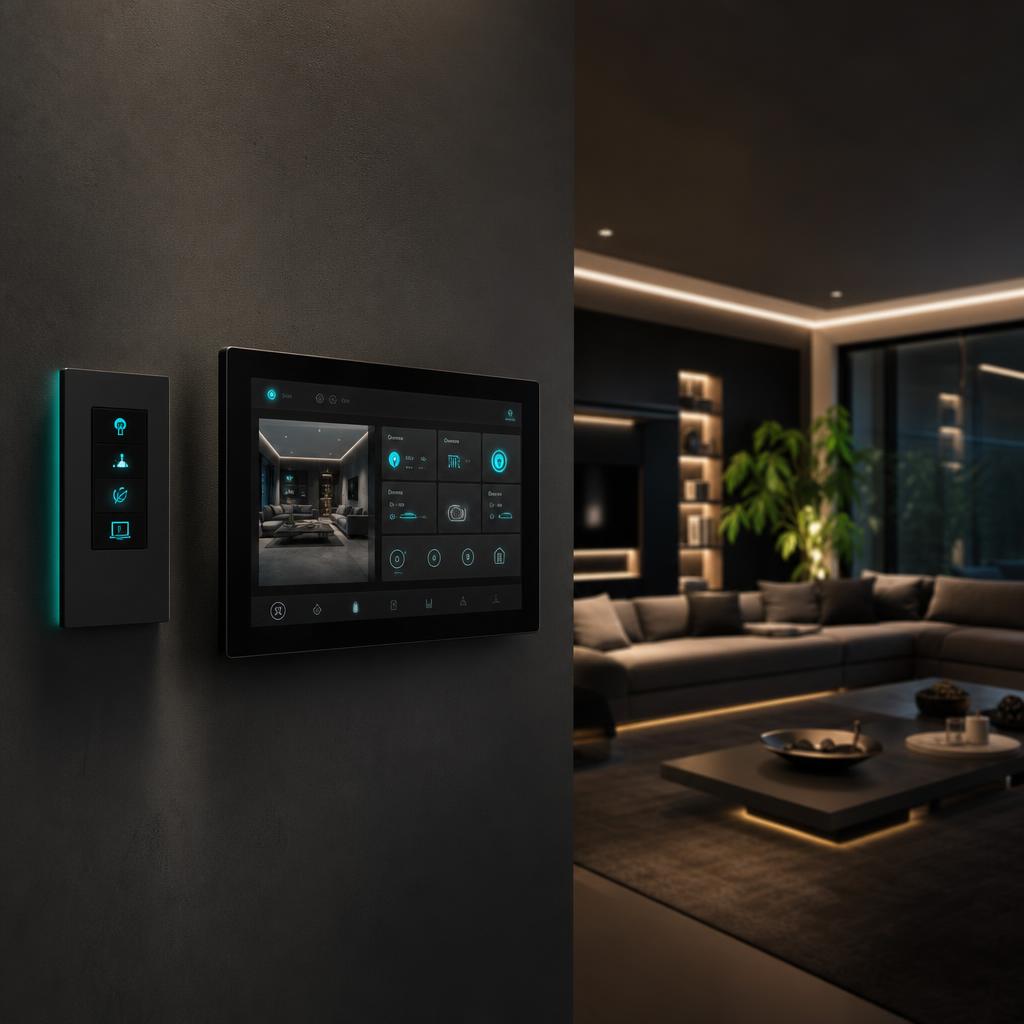
Define the result before the platform
Start with a short list of useful outcomes: a single bedtime lighting scene, blinds that can be controlled locally, or a simple way for guests to turn on a room. A list of devices does not explain the behaviour you want, and buying them first can restrict the design.
Distinguish lighting control from broader integration with climate, security or entertainment equipment. Compatibility depends on the actual products and interfaces. Ask which functions are supported now rather than assuming everything advertised as “smart” will work together.
Match the approach to building access
During a new build or major renovation, open walls may make dedicated control wiring and planned equipment locations practical. Hardwired arrangements still need a clear design and ongoing support; cables alone do not guarantee a simple user experience.
A retrofit may use compatible wireless controls where new cable routes would be disruptive. The assessment needs to consider existing wiring, radio coverage, construction materials, power requirements and accessible space. Never open a switch plate to check these details yourself.
- Open walls: coordinate control wiring, joinery and equipment access early.
- Occupied home: discuss room-by-room staging and disruption.
- Mixed renovation: clarify where wired and wireless elements would meet.
Compare dependence, not just features
Ask the designer to explain what happens if the internet, router, hub or a cloud service becomes unavailable. Those are different failures. Some controls may continue locally while voice commands or remote access stop; the answer must be specific to the proposed system.
Also ask how ordinary wall controls behave. A household should not need a phone for every basic action. Consider children, visitors and anyone who may struggle with small screens, complex scenes or unexpected automatic operation.
Request a staged, supportable proposal
A small first stage can establish whether the controls suit the household before more rooms are added. Agree what can genuinely be expanded, which components might need replacement and whether future additions depend on a particular supplier or software service.
The ZEOS smart-home service page is the place to discuss installation scope. Supply your desired behaviours, floor plan and renovation access so the proposal can explain the trade-offs instead of simply naming a protocol.
General planning information, not a diagnosis or electrical work instructions. Requirements and equipment suitability must be confirmed for your property.
Need help with smart home automation?
Describe three everyday actions you want to simplify, the rooms involved and whether walls will be open. Ask for a proposal that explains manual controls, network dependence and future expansion.
Explore Smart Home Automation with ZEOS →